
An Analytical Exploration of Black Metal’s Starkest Vision
The Cold Genesis of a Scene
In the early 1990s, a remote and frostbitten corner of Europe birthed one of the most uncompromising musical movements the world had yet seen. The Norwegian Black Metal scene, rising from the cultural peripheries of Oslo and Bergen, forged a sonic rebellion against both the sanitized mainstream metal of the time and the societal structures of contemporary Scandinavia. Characterized by its lo-fi aesthetics, misanthropic philosophy, and fiercely independent spirit, Norwegian Black Metal was less a musical genre than a volatile cultural phenomenon.
At the heart of this movement stood Varg Vikernes, a young and ambitious musician from Bergen who, under the name Burzum, would release a sequence of four albums between 1992 and 1996 that would radically reshape the boundaries of extreme music. These works, “Burzum”, “Det Som Engang Var”, “Hvis Lyset Tar Oss”, and “Filosofem”, are often viewed not simply as records, but as artifacts: raw expressions of isolation, transcendence, and destruction that mirrored the psychological landscapes of their creator and the restless, nihilistic ethos of the scene around him.
Although Vikernes' later criminal actions have overshadowed much of the historical discourse surrounding Burzum, a neutral and critical examination of the early albums reveals a uniquely influential body of work, one that continues to cast long shadows over Black Metal, ambient music, and experimental sound art.
This analysis seeks to navigate that body of work carefully: examining Burzum’s first four full-length releases in sequence, assessing their sound, aesthetics, lyrical thematic, and place within the cultural ferment from which they emerged.
Burzum’s First Four Records: A Cold Flame in the Darkness of Norwegian Black Metal

Norway in the Early 1990s — A Scene of Fire and Ice
In the twilight of the 1980s, Norway was not known for musical extremity. While death metal and thrash had taken root globally, the icy North still seemed peripheral to these movements. But in the early 1990s, a small but determined group of young musicians in Norway, driven by discontent, nihilism, and a vision of radical purity in art, began to forge something new, something colder, more austere, and spiritually violent. From the ashes of death metal, a new form arose: Norwegian Black Metal, a genre more ideologically defiant, more hostile to modernity, and steeped in themes of nature, mythology, and existentialism.
This movement, centred around Bergen and Oslo, coalesced around a loose group of individuals and bands, most notably Mayhem, Darkthrone, Emperor, Immortal, and Burzum. It wasn’t merely a sonic revolution; it was an aesthetic and philosophical schism. Harsh low-fidelity recording, shrieked vocals, tremolo-picked guitars, and anti-commercial values became badges of authenticity. These musicians, mostly teenagers or barely out of adolescencem were reacting against sanitized Western consumerism, institutional religion, and the death of mystery in art.
Into this inferno stepped Varg Vikernes, a young man from Bergen whose solo project Burzum would become one of the most influential — and controversial — names in the Black Metal pantheon. Vikernes was a voracious reader of mythology and philosophy, drawn to ancient Nordic mysticism and an idealized pre-Christian past. Unlike many of his contemporaries, who derived their rage from satanic rebellion, Vikernes expressed a longing for transcendence and loss, more sorrowful than blasphemous.
Between 1992 and 1996, Vikernes released four albums under the Burzum name that would define the core aesthetic of Black Metal and expand its horizons into ambient and minimalist territory. These records, “Burzum”, “Det Som Engang Var”, “Hvis Lyset Tar Oss”, and “Filosofem”, form a sequence of evolving sonic identity, growing colder, more atmospheric, and more philosophical with each release.
“Burzum” (1992): The Birth Cry of Isolation
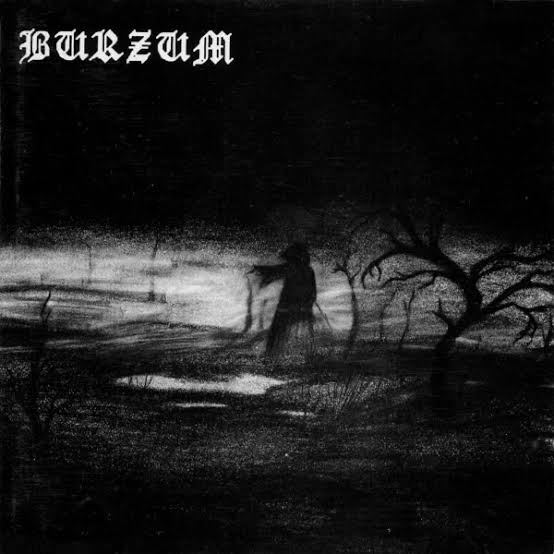
Released in 1992, “Burzum” was the debut album of Varg Vikernes, recorded at Grieg Hall in Bergen with the help of Eirik Hundvin (aka Pytten), the producer who would become a mainstay of the scene. At the time of its release, Vikernes was still collaborating with Mayhem, and his solo work was seen as part of the rising tide of Norwegian extremity.
From the opening of “Feeble Screams from Forests Unknown,” Burzum establishes a template that mixes harsh Black Metal with fleeting moments of melody and ambient drift. The production is raw but not completely primitive; guitars are drenched in reverb, drums feel distant, and Vikernes’ voice, a strangled scream, feels like it’s being emitted from a cavern deep beneath the earth. Tracks like “Ea, Lord of the Depths” and “A Lost Forgotten Sad Spirit” showcase a balance between riff-oriented Black Metal and atmospheric repetition. There are no complex song structures; instead, Vikernes relies on hypnotic loops and gradual layering. The feeling is trance-like an echo of Bathory’s slower works but filtered through a lens of solitude.
The album also introduced Burzum’s ambient experiments with the synthesizer pieces “Channelling the Power of Souls into a New God” and the outro “The Crying Orc.” These brief tracks foreshadow the ambient leanings that would dominate later works. While the lyrics are cryptic and somewhat archaic in tone, they touch on themes of pagan longing, existential sorrow, and spiritual warfare. Unlike the openly Satanic or misanthropic tone of Mayhem or Darkthrone, Vikernes' lyrics hint at a mythical inner world, one steeped in fantasy, but mournful and lonely.
At the time, Burzum was received as a promising, if rough, entry into the Black Metal canon. Retrospectively, it is viewed as one of the pivotal albums in establishing the genre’s atmosphere-first approach. Its mixture of aggression and atmosphere helped lay the foundation for what would become the second wave of Black Metal aesthetics.
“Det Som Engang Var” (1993): Expansion and Evolution
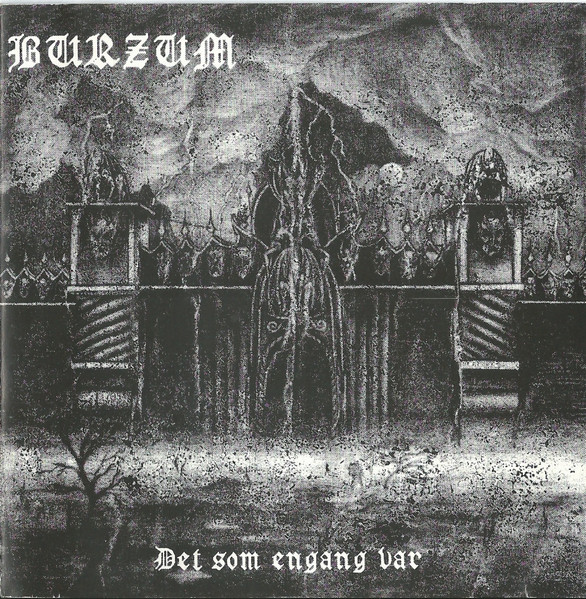
By the time Det Som Engang Var (“What Once Was”) was released in 1993, Burzum had begun to transcend the basic template of raw Black Metal. This album, recorded once again at Grieg Hall, represents a significant leap in compositional ambition and emotional complexity.
The production is still lo-fi, but clearer than the debut. Guitars are slightly more present in the mix, and Vikernes’ use of repetition becomes more deliberate and hypnotic. The songwriting becomes more structured and lengthier; many tracks exceed six minutes, unfolding slowly with minimal variation in tone or key.
“Key to the Gate” is one of the more aggressive pieces on the album, while “Lost Wisdom” and “Den Onde Kysten” drift toward the ambient and mystical. “Svarte Troner,” an entirely synth-driven closer, is a haunting glimpse into Vikernes’ fascination with minimalist atmosphere over metal orthodoxy. Perhaps the most notable evolution is in Vikernes’ use of melody. He crafts riffs that shimmer with a strange melancholy, suggesting an emotional palette that is more tragic than angry. The lyrics, while still cryptic, begin to articulate Vikernes’ vision of a lost ancient world, not merely in historical terms but as a spiritual condition. The title itself, “What Once Was,” is a lament for a past that can no longer be reached, an echo of European romanticism but framed within pagan metaphysics.
Critics and fans alike began to recognize “Det Som Engang Var” as more than a sophomore effort; it was a refinement of vision. It maintained the aggression of the first record but deepened the emotional terrain. Today, it is often considered a transition album, marking the movement from raw Black Metal toward something more transcendental, a soundscape for inner ruin and spiritual escape.
“Hvis Lyset Tar Oss” (1994): The Cold Ideal Made Sound
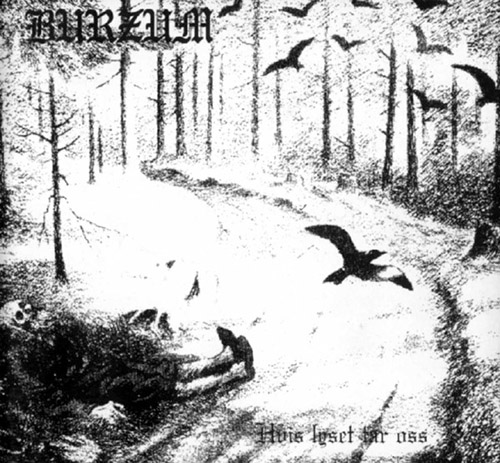
Recorded in September 1992 but not released until 1994 (after Vikernes' arrest), “Hvis Lyset Tar Oss” (“If the Light Takes Us”) is widely considered Burzum’s masterpiece. It is here that Vikernes fully realizes his aesthetic: sparse, minimalistic, and spiritually distant. It is Black Metal stripped to its emotional core.
The album consists of just four tracks, with three long-form compositions and one ambient closer. The metal tracks, “Det Som En Gang Var,” “Hvis Lyset Tar Oss,” and “Inn I Slottet Fra Drømmen”, stretch from ten to fourteen minutes, each based on just a few riff cycles. There is little dynamic contrast, but the power of the record lies in its hypnotic repetition and textural weight. Drums are machine-like, guitars blur into waves of distortion, and Vikernes’ vocals are a tortured cry that often feels like it’s trying to escape the music itself. The final track, “Tomhet” (“Emptiness”), is a 14-minute ambient piece, sparse, haunting, and meditative.
Thematically, the album deals with spiritual transcendence and the rejection of modern “light”, that is, civilization, rationality, and Christianity. The title is ironic: if the light takes us, then we are lost. Vikernes positions darkness not as evil, but as origin, a state of primal truth. Unlike the first two albums, the lyrics are more abstract and less concerned with narrative. They act more like philosophical aphorisms than stories, a shift that aligns the record closer to metaphysical art than Black Metal as such. “Hvis Lyset Tar Oss” has achieved an almost mythological status in the Black Metal world. Many consider it the single most emotionally affecting Black Metal album ever made. Its long-form compositions, minimalistic aesthetic, and philosophical aspirations have influenced artists across genres — from depressive Black Metal to post-rock and ambient drone.
“Filosofem” (1996): Isolation’s Final Word
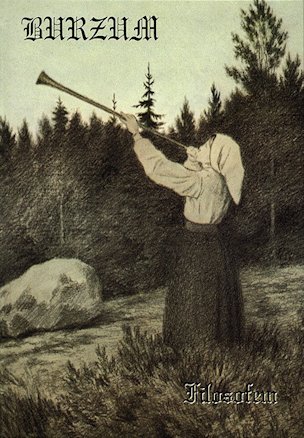
Although recorded in 1993, “Filosofem” was released in 1996, while Vikernes was serving a prison sentence. It stands as the most iconic and widely praised Burzum album, often cited as a turning point in the history of extreme music.
“Filosofem” represents the final evolution of Burzum’s sonic language. It is cold, vast, and glacially slow. The album opens with “Dunkelheit,” the only Burzum track to have a music video, and arguably the most famous piece Vikernes ever recorded. Based around a single descending riff, the song unfolds with eerie patience, drenched in delay and minimalist percussion. The production is deliberately degraded: guitars are fuzzed into oblivion, drums sound like distant thunder, and the vocals are buried in the mix like whispers from a cave. It’s not lo-fi by accident, it’s lo-fi as a statement. Other tracks like “Jesu Død” and “Beholding the Daughters of the Firmament” stretch the concept of Black Metal to its breaking point, sounding more like minimalist sound experiments than traditional songs. “Rundtgåing av den transcendentale egenhetens støtte” is a 25-minute ambient piece that is either maddening or mesmerizing, depending on the listener’s threshold for repetition.
“Filosofem” represents Vikernes’ ultimate expression of philosophical retreat. The music becomes the sound of exile, not only from society but from the self. Lyrics are sparse and mostly symbolic, drawing on German Romanticism, Norse myth, and metaphysical despair. The tone is one of cosmic loneliness, not hate. It is the most critically acclaimed Burzum album and arguably one of the most important Black Metal records ever released. It bridges genres, influencing ambient musicians, post-metal artists, and even film composers. It is the culmination of Burzum’s aesthetic, and a final farewell to Black Metal before Vikernes would turn entirely toward ambient composition in later years.
The Burzum Legacy — A Mirror in the Ice
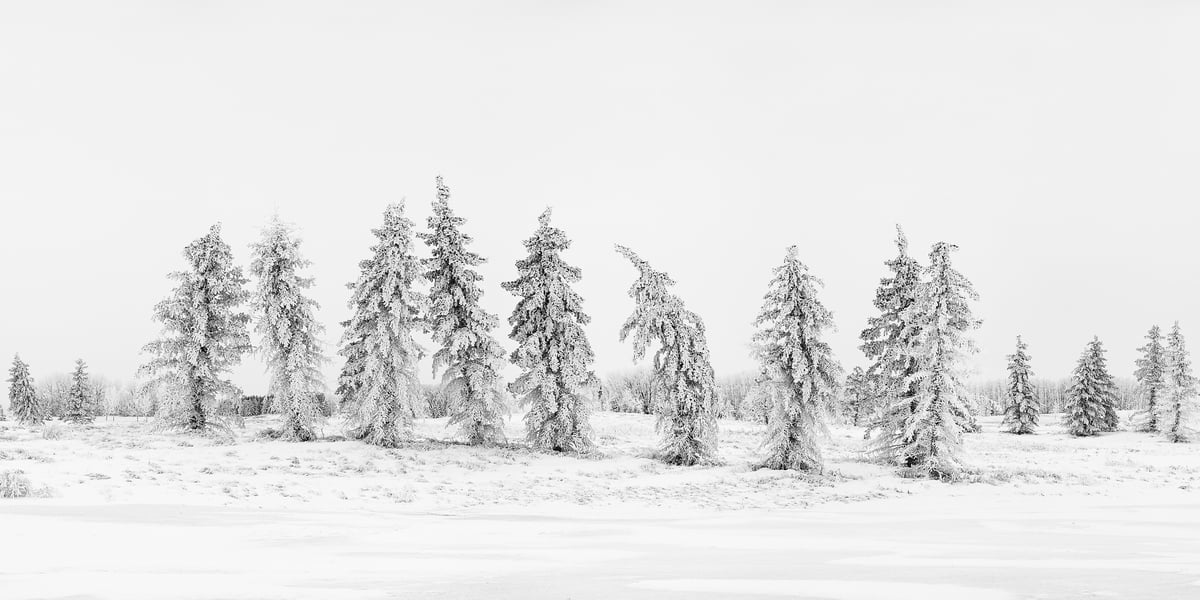
Taken together, Burzum’s first four albums represent one of the most striking and influential trajectories in extreme music. What began as a raw solo project within a burgeoning scene became, over just a few years, an artistic statement of alienation, sorrow, and transcendence. Through increasingly minimal structures, ambient experimentation, and mythic lyrical themes, Vikernes forged a body of work that remains as resonant as it is controversial. To discuss Burzum is to walk a tightrope, one cannot ignore the historical context, the ideology of its creator, or the violence that has come to define much of the public discourse around him. Yet within that maelstrom lies a set of records that continue to captivate listeners for their cold beauty and stark vision.
Burzum’s early tetralogy is not just music, it is a document of a time, a place, and a mindset. It embodies the Norwegian Black Metal scene in its most extreme moment: not just musically, but philosophically. The shrieks, drones, and ambient voids Vikernes created still echo through the forests of sound made by others, from one-man Black Metal projects to ambient isolationists, all tracing their path back to this cold flame that burned briefly, but brightly, in the heart of the Norwegian night.
Comentários
Enviar um comentário