Between Warmth and UneaseAn Interview with Spiritual Decay
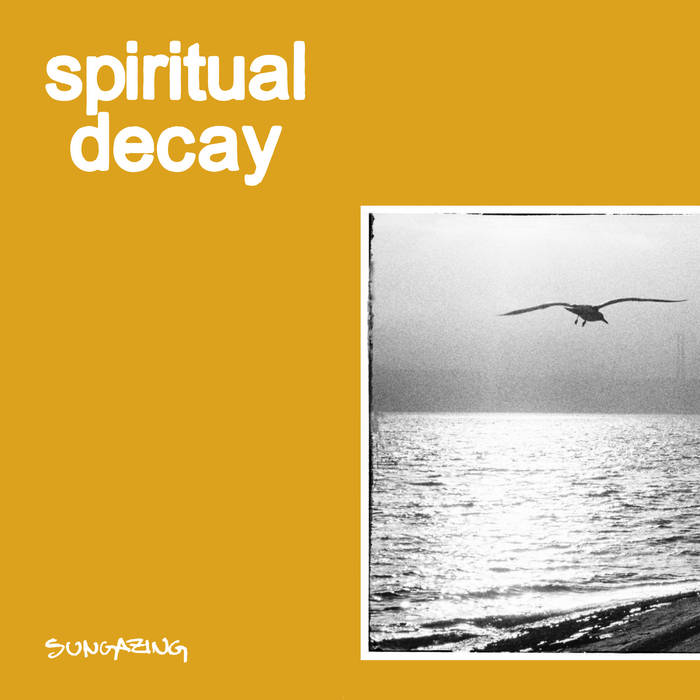
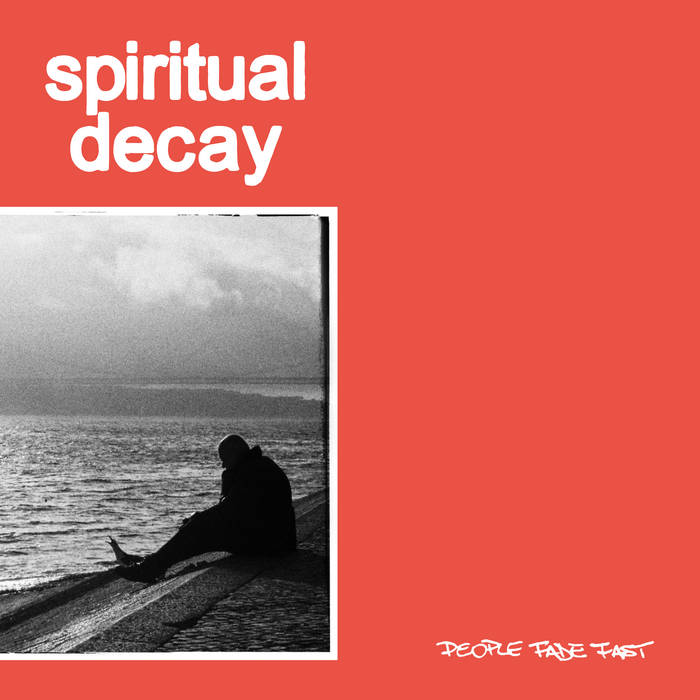
Spiritual Decay have emerged quietly, yet insistently, from Lisbon’s underground, a collective of Brazilian-born musicians, who’s emotive Post-Hardcore draws from the lineage of Revolution Summer (Fugazi, peepz) while embracing a subtle tension between melody and rawness. Their upcoming debut EP “First Four Songs”, including the evocative single “Sungazing” and “People Fade Fast”, position the band not as mere revivalists, but as contributors to a nuanced contemporary emotional Punk discourse.
Let us jump into it…
Their music occupies a space defined by both fragility and intensity, not in pursuit of catharsis, but perhaps its examination. In a landscape where “emotional authenticity” is often commodified, Spiritual Decay seems intent on preserving nuance over spectacle. With roots in Brazil and a home in Lisbon’s vibrant DIY scenes, their trajectory already reflects a blend of geography, memory and affect. As “Sungazing” gestures towards light and absence, I asked the band to expand on what fuels their work: the interstitial spaces between longing and attachment, the role of community versus individual expression, and the broader socio-cultural forces shaping their art.
1. The name Spiritual Decay suggests a tension between divine existence and loss/destruction. How does this idea shape the emotional and philosophical core of your music?
Once, in London, I asked an Indian man if he was religious. He replied that he was spiritual, almost as if correcting a misunderstanding. At the time, I didn’t fully grasp what he meant. Later, I began to realize that for many people, when religion comes up, it often feels more about acting has a good person than actually practicing goodness.
Spirituality, on the other hand, seems more intimate and philosophical. Fewer rules, more reflection. Less collective rhetoric, more inner transformation that can later reflect outward in the way you relate to others.
Some time after that, I traveled to Southeast Asia. Walking through the streets, I felt strangely welcomed. People smiled. When I got lost, someone would always appear willing to help, share food, or show genuine interest.
That was when the conversation finally made sense. Maybe spirituality, when truly lived, doesn’t remain in the realm of transcendence. Maybe it reveals itself in everyday life, in the simplest acts of kindness.
2. Your songs balance melodic restraint with Post-Hardcore intensity. How do you approach songwriting in a way that allows vulnerability and abrasion to coexist naturally?
It’s something that happens naturally.
I think the themes having a slightly different perspective than what people usually expect from a Hardcore band helps. There’s already a certain tension there, so the music doesn’t need to exaggerate it.
We just let the songs grow organically. If a part calls for more intensity, we make it heavier. If there’s tension, we add layers to create texture. If something asks for delicacy, we strip it back and hold it gently.
We listen to very different kinds of music, and we try to borrow a little from here and there, experimenting without holding on to hardcore purism too tightly.
3. “Sungazing” evokes both illumination and discomfort, an act of looking that risks harm. What does this metaphor represent within the wider context of your work?
André started writing this lyric, and I ended up finishing it. We have this dynamic sometimes, and I think it takes the writing in an interesting direction since, even within the band, we can share and collaborate from different perspectives.
For me, the song is about facing something you know could hurt you, but still choosing to look. It could be a difficult truth, a trauma or even parts of yourself that are uncomfortable.
4. There is a strong sense of space and dynamics in your compositions, with quiet passages carrying as much weight as the louder moments. What role does silence play in your music?
In our music, silence comes in the form of reflection, as if it is the deep breath before the dive, but at the same time, it represents the discomfort of looking inward, with less distractions from yourself; silence is as important as the noise, they complete each other.
5. Your lyrics often feel suggestive rather than declarative. Do you see them as personal reflections, or as open frameworks for listeners to inhabit? As Brazilian musicians creating within Lisbon’s underground, how has displacement or relocation influenced your sense of identity and artistic expression?
We put a lot of ourselves into the music, but we also like exploring other perspectives. We avoid turning the lyrics into fixed statements or speeches telling someone how to think or act. We prefer to create images, fragments, and sensations. They are our reflections, but we leave blank spaces intentionally, because the music only completes itself when the listener projects their own experience onto it.
Displacement changes everything. When you leave your country, you start to notice parts of your identity that were previously invisible to you. Also, it's a funny thing to once again be the newcomers in a well-established scene just like we did in our respective hometowns many years ago.
In Lisbon, there’s cultural proximity, but also a gap, even when speaking the same language. For one, we were positively surprised by how warmly we were welcomed in the Lisbon underground scene as many received us with open arms even as complete strangers.
On the other hand, we were included in a playlist of Portuguese underground bands, something simple and factual. Yet a comment appeared saying: “Tuga é o caralho 😂”. It shows how, even in the underground, being an immigrant can become a point of questioning, easily disguised as a joke.
6. In an age of algorithmic discovery and rapid consumption, how do you preserve intentionality and depth in both your music and its presentation?
It’s easy to get overwhelmed thinking about how an algorithm can determine the reach of your work. On the other hand, it’s also an amazing time, making music at a level that was once unimaginable and sharing it online has never been easier. Honestly, we don’t think too much about it. First, we make music we’d want to listen to ourselves, then we share it with friends, hoping that others can connect with the message.
7. Bandcamp remains central to how you share your work. How important is creative autonomy and direct connection with listeners to Spiritual Decay?
We’re not trying to virtue signal; we just want as many people as possible to hear our music. The conversation around streaming is interesting. We feel that Bandcamp treats the music community, especially the underground, more honestly, so it always made sense to direct people there.
At the same time, we know a lot of people use other platforms, like Spotify, for practical, economical or habitual reasons. It wouldn’t make sense to limit our reach. We’re also active on networks like Instagram and Facebook, and while every platform has its contradictions, we try to navigate them without losing ourselves.
8. Much of your music seems to resist emotional resolution. Do you believe art has a responsibility to offer closure, or is it more honest to leave questions unresolved?
I don’t think art has an obligation to provide closure. Life almost never does.
Many experiences remain unresolved, ambiguous, or hanging in the air. We carry questions that don’t have definitive answers, and it’s okay that way.
Individuals are also constantly changing throughout life. What makes sense today might feel strange tomorrow. And it’s okay to be a little weird sometimes, haha.
9. When listeners step away from your music, what state of mind, or shift in perspective, do you hope lingers with them?
We don’t expect a specific conclusion. Maybe someone listens and thinks, “I feel this too, even if I can’t explain it.”
We’re not interested in handing out ready-made answers or forcing some PMA mindset. We want to create a space where doubt, contradiction, and discomfort can exist without needing to be resolved.
The End…
Spiritual Decay’s work, poised among memory, emotion, geography and tension, suggests an artistic horizon that values introspection over spectacle, ambiguity over tidy closure. Through the lens of “Sungazing” and “People Fade Fast”, from their forthcoming EP, the band invites listeners not just into sound, but into the spaces between sensation and sense. These questions are offered not as frameworks for definitive answers, but as openings into a conversation that their music has already begun.
... and we are just starting.

Comentários
Enviar um comentário