
From the silent interior spaces where thought dissolves into shadow and memory fractures into echoes, emerges the voice of Eremus, a project born not from spectacle, but from introspection. Formed in Lisbon in 2016, Eremus carved its identity within the melancholic essence of Portuguese Black Metal, where sound becomes confession and composition becomes reflection. The band’s earliest expressions, such as the 2016 rehearsal demo “Sonho”, already revealed a fascination with liminality: the fragile space between sleep and consciousness, self and absence.
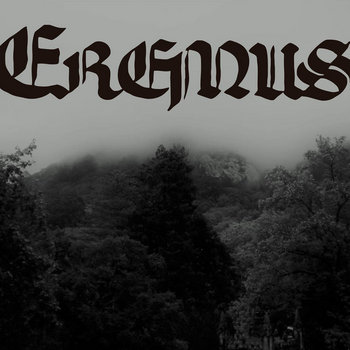
Years later, that embryonic vision would unfold into the full-length “Monólogo”, released in 2023, an expansive meditation written between 2016 and 2019, embodying solitude, melancholia, and existential questioning through long-form compositions and introspective narrative arcs. Yet beyond the music itself, Eremus carries a deeper human dimension: a brotherhood forged through sound, memory, and shared struggle. The passing of Miguel Carneiro in 2024, a central creative force behind vocals and percussion, casts a solemn shadow over the band’s legacy, transforming their music into something even more fragile and enduring, like a voice echoing through abandoned corridors of time.
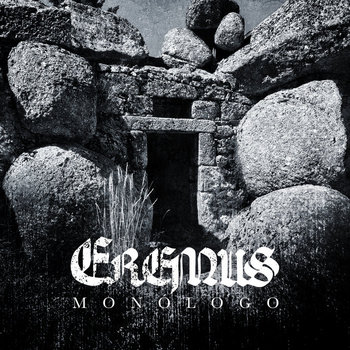
What follows is not merely an interview. It is an attempt to enter the silence between notes, to understand what compels sound to emerge from emptiness.
Every Depressive Black Metal project begins not with sound, but with silence. What emotional or existential conditions first gave rise to Eremus in 2016, and what compelled you to translate those inner states into music? 10 years already… very round number, I dare say.
Vasco – Thank you for the invitation and for the opportunity to share part of the musical journey I experienced with my brother Miguel. Around that time, I had recently joined Miguel’s doom/death band, My Dementia, and rehearsing with him in a band setting was something I truly cherished. Although I may consider myself somewhat of a ‘doomster’, the emotion behind Black Metal was always something that deeply drew me in. And, as most would say, especially being a 16-year-old at the time, I felt the need to write my own music, which naturally ended up leaning towards the sonorities of Black Metal. Regarding the core of Eremus and the emotional landscape behind it, I could name a few things, maybe with more exposure than I would like: the feeling of not belonging in many contexts, a natural hatred and nausea towards people who choose to become copies of other people’s trends, and, on a deeper level, a certain relationship with death, something that has become more pronounced through recent events.
Eremus has always been deeply tied to personal bonds, particularly the collaboration between Vasco and Miguel. How did your creative relationship shape the emotional core of the band’s sound?
Vasco - Beyond being my brother, Miguel and I shared a very specific musical taste, and I believe I will never again share such a similar connection in music with anyone else, taste-wise. So, it only felt natural to propose the idea of starting a new musical project together, with him handling the vocals. At the time, perhaps because I had grown up watching him sing, I think I took his talent for granted and did not recognize it enough. But right now, I believe he truly had a gift for vocals. I showed him the riffs I had written for what eventually became ‘Entre o Sonho e Sonho’ and ‘Sonho, Não Sei Quem Sou’ and we just went on with it. Looking back, some influences I could name would be Burzum, Inverno Eterno, Urfaust, Morte Incandescente, Black Howling. All of these were projects we both held in high esteem.
The earliest compositions that formed the foundation of your demo “Sonho” already carried a deeply introspective tone. Looking back now, what aspects of those first songs still define Eremus today?
Vasco - As I was saying, I came up with the structural core of both songs and Miguel - being an avid Fernando Pessoa enthusiast - suggested that he knew exactly which poems would best embody the melancholy behind the music. He had only played drums a handful of times before, but we went into a rehearsal room to try to play the songs. He also shaped the vocal metrics on the spot as we were playing. We immediately felt that the energy behind the mid-tempo approach to the drums was perfect, and we recorded everything in a direct take right there, using a random microphone in the room. That rehearsal recording ended up becoming the demo we released that year, in 2016, being the motto for the creation of the ‘Monólogo’ full-length in the years that followed. This demo was only released digitally, but later this year, for its tenth anniversary, a very limited tape edition will be released.
The loss of Miguel in 2024 is something that inevitably reshapes both memory and artistic direction. How has grief transformed your relationship with Eremus and with the music you created together?
Vasco – About artistic direction, one thing I’ve noticed from this interview so far is that you consider Eremus to play DSBM. You’re not the first to do so. Although I can understand why some might interpret it that way, I think that is clearly something we never considered it to be. It is true that it may evoke some emotions that are more easily associated to DSBM, but there is a difference between touching certain emotional or musical landscapes through subjective interpretation and actually deriving from the genre’s core elements. Not everything needs to be confined into a static label. Eremus’ releases, so far, are rooted in Black Metal. What kind? Don’t know, “Ermo, Vazio, Black Metal”. In the aftermath of Miguel’s death I wrote an EP that still needs some work before recording, and also some courage on my part to finally let it see the light of day. Funnily enough, that next release might actually give you enough reasons to see it as DSBM. If you have considered ‘Monólogo’ as a DSBM release, then you will consider this one to be as well. So yes, to concretize those thoughts into an answer to your question, grief has certainly played a role in shaping the future sound, as I explained, as well as the lyrics I’ve written and, of course, myself now taking over vocal duties both live and in studio.
Do you view your recorded material now as documentation of a shared journey, a memorial, or something that continues to evolve beyond its creators?
Vasco – Yes, it now acts as some sort of memorial. I think there is a quote about one being immortalized through art. I hold on to that idea and believe in it. What exists today within Eremus releases is both a testimony of what we learnt with each other musically during our journey, and, at the same time, a reflection of what could have been. With Eremus, we only played a gig together in 2017, so he did not have the chance to present the ‘Monólogo’ full-length live. I owe it to him to continue sharing the music we created together and last year I played our album live in an event I organized in his honour, “Em Memória do Miguel” (In memory of Miguel), around the anniversary of his death, a night that also featured our friends from Artnis and Morte Incandescente. A few weeks ago, we held the second edition of this event with our other project, My Dementia. Maybe, there will be a third edition next year, let’s see what time tells. He will always be part of Eremus. His name will be present on every release and I’m simply here in his place, playing for both of us, even if the art naturally evolves into places unknown to me right now.
Many listeners find solace in melancholic music. When composing, do you write primarily for yourself, or do you consciously consider the emotional experience of those who will listen?
Vasco – I think the whole purpose of writing music is to make the composer feel better (or to feel something at all?) or at least translate whatever shit we might have inside us. So, of course what I do, I do it for myself, otherwise it would be pointless. In my case it has simply been taking different textures of melancholy.
The album “Monólogo” unfolds as a long-form narrative, almost like chapters of a fragmented internal dialogue. Was the album conceived as a continuous emotional arc, or did its structure emerge organically over time?
Vasco – A little mix of both. Our previous demo “Sonho” served as the foundation for conceiving “Monólogo”. We wanted to re-record “Entre o Sono e o Sonho” and “Sonho, Não Sei Quem Sou”, because, as I’ve explained earlier, that demo recording was our first rehearsal, and throughout the years of playing those songs, they acquired some new details. Focusing on the energy they emanate, those two songs function almost as opposites of one another. It may not be something immediately noticeable after only a few listens, and perhaps it becomes clearer when experienced live, but the first track exhales aggressiveness and energy within its apparent melancholy, whereas “Sonho, Não Sei Quem Sou” (track 6) is just pure melancholy and stillness. The other songs featured throughout the album act as intermediates of those emotional states, like a descending path. If you listen to the album from start to finish, the further it progresses, the less aggressive energy it carries, gradually evolving towards melancholy until the outro track “Entre o que Sou e o que Fui”, where only desolation remains, in opposition to “Entre o Sono e o Sonho”. That way we could transmit the evolution of the feeling instead of sounding just a flat motionless object.
The compositions stretch beyond conventional lengths, allowing themes to breathe and decay naturally. What role does duration play in shaping the psychological atmosphere of your music?
Vasco – Indeed, duration is an important aspect when it comes to allowing myself to introspectively immerse in the sound, especially within the realms of mid-tempo Black Metal, Doom, Funeral Doom and derived. That’s my take on it, yes, but in reality, it all happens quite naturally. “Monólogo” was written between 2016-2019, although the outro track “Entre o que Sou e o que Fui” was actually composed later during the recording sessions in 2021. Initially, my intention was for it to be a short track, like a 3min outro track. But while I was recording the guitars and keys, the composition simply evolved into an 8 minute track and there was nothing I could do about it.
In Depressive Black Metal, tone and atmosphere often carry more meaning than technical complexity. How do you approach the creation of sound textures that evoke emptiness, distance, and introspection?
Vasco – Absolutely. That was one of the reasons why we wanted the recording to sound as close as possible to what we played in the rehearsal room, so that it could properly capture the right feeling. For this particular album, if it had been recorded with a different guitar tone instead of my own amp or with overproduced drums, I think I would not be satisfied with the result, especially now, knowing that I will not play again with Miguel. As for my personal taste on other people’s music, I often find myself far more immersed in less technical compositions. Naturally, that has an impact on both my writing and on the way I translate emotion into music.
Your music frequently balances rawness with clarity. How do you determine when a recording feels emotionally authentic rather than merely technically complete?
Vasco – From my point of view, being creatively authentic, at least in Black Metal, requires a certain degree of rawness, whether in the composition itself or in the production afterwards. Otherwise, it risks becoming something artificial, almost algorithmic, made of plastic, with no intrinsic substance beyond fancy videos and staged imagery. Returning to the music itself, depending on the genre and on the project, that rawness may manifest in different perspectives, with more or less technicality. In Eremus case, I would say a raw feeling has been present, so far, in both composition and production.
With roots extending back to 2016 and a full-length release emerging years later, Eremus reflects patience and introspection. How has time influenced your artistic discipline and expectations?
Vasco – The time it took to release the album was, in fact, too long. As for the album itself we did what we could. In retrospect, what I regret most is not having played more concerts with Miguel, especially having the album written since 2019. Then came the lockdowns from 2020-2022 that delayed the recordings and by the time everything returned to normal, it was already too late. Now the album is out there, and he is not here to play it live with me.
After “Monólogo”, what visions remain unresolved within Eremus? Are there ideas, themes, or emotional territories that still demand exploration?
Vasco- As I mentioned above, later this year I will release the “Sonho”
demo on tape and there is an EP written to be released somewhere in time,
featuring more desolation than before in the past releases. Meanwhile, I intend
to play live only occasionally, as I want to continue sharing our music, but at
the same time balance it with the mental cost it carries.
When future listeners encounter the music of Eremus decades from now, what do you hope they feel in the silence that follows the final note?
Vasco – Ermo. Vazio. Black Metal.
THE FINAL ECHO...
As our words settle into stillness, what remains is not merely sound, but memory. Bands like Eremus remind us that Black Metal, at its most vulnerable, is not an act of aggression, but of exposure. It reveals the interior landscapes many fear to confront: loneliness, mourning, uncertainty, and reflection. Through works such as “Sonho” and “Monólogo”, Eremus has transformed private introspection into shared experience, music that does not shout but lingers; does not dominate, but haunts. Their art exists not as spectacle, but as testimony.
And perhaps that is the true essence of their work: not to conquer silence, but to speak from within it. Where echoes fade, memory remains. Where memory remains, so too does the voice. And somewhere in the distance, the monologue continues.
Comentários
Enviar um comentário